

How Temperature Changes Affect Tyre Performance Year-Round
Ever hopped into your car on a cold Essex morning and found your tyre pressure warning light staring back at you? Or returned to your vehicle on a hot summer afternoon and noticed your tyres feel firmer than usual? These changes are directly linked to temperature fluctuations, and understanding them can help improve safety, handling, fuel economy, and tyre life.
Tyre health involves far more than simply checking tread depth. Temperature changes directly affect tyre pressure, which influences braking performance, grip levels, steering response, fuel consumption, and overall driving safety. A few simple monthly checks can help prevent uneven wear, poor handling, and unexpected roadside problems throughout the year.
If you experience a puncture, pressure issue, or sudden tyre problem, our reliable mobile tyre fitting services across Essex can provide quick assistance at home, work, or roadside locations.
Need Mobile Tyre Fitting in Essex?
From emergency roadside tyre replacement to same-day mobile tyre fitting at home or work, Brads Mobile Tyres provides fast and reliable tyre services across Essex and surrounding areas.
If you need help with a puncture, pressure issue, damaged tyre, or emergency callout, our mobile tyre fitting services across Essex are available 24/7.

The Science Behind Temperature and Tyre Pressure
The air inside your tyres expands and contracts as temperatures rise and fall. These pressure changes can noticeably affect the way your vehicle handles on the road.
How Warm Weather Affects Tyres
- As temperatures increase, the air inside the tyre expands.
- Tyre pressures can rise by 2–4 PSI during warmer weather or after long motorway journeys.
- Higher pressures can reduce the tyre’s contact patch with the road, affecting grip and braking.
- Overinflated tyres may wear more quickly through the centre of the tread.
- Tyres left in direct sunlight will often show higher pressure readings than tyres parked in the shade.
How Cold Weather Affects Tyres
- Cold temperatures cause the air inside tyres to contract, reducing pressure.
- Even overnight temperature drops can lower tyre pressure by 1–2 PSI.
- Low tyre pressure increases rolling resistance and fuel consumption.
- Cold rubber becomes firmer, reducing grip and increasing braking distances.
- Underinflated tyres wear more heavily along the edges of the tread.
The 10°F Rule
As a general guide, tyre pressure changes by around 1 PSI for every 10°F (5.5°C) change in temperature.
| TEMP CHANGE | APROX PSI CHANGE | POSSIBLE EFFECT |
|---|---|---|
| 10°F (5.5°C) decrease | -1 PSI | Underinflation and reduced grip |
| 10°F (5.5°C) increase | +1 PSI | Overinflation and firmer ride |
| 20°F (11°C) change | -2 PSI Swing | Noticeable handling differences |
| Large seasonal temperature changes | Up to 4 PSI | ncreased wear and safety concerns |
Tip: Always check tyre pressures when the tyres are cold — ideally before driving or after the vehicle has been parked for at least two hours.
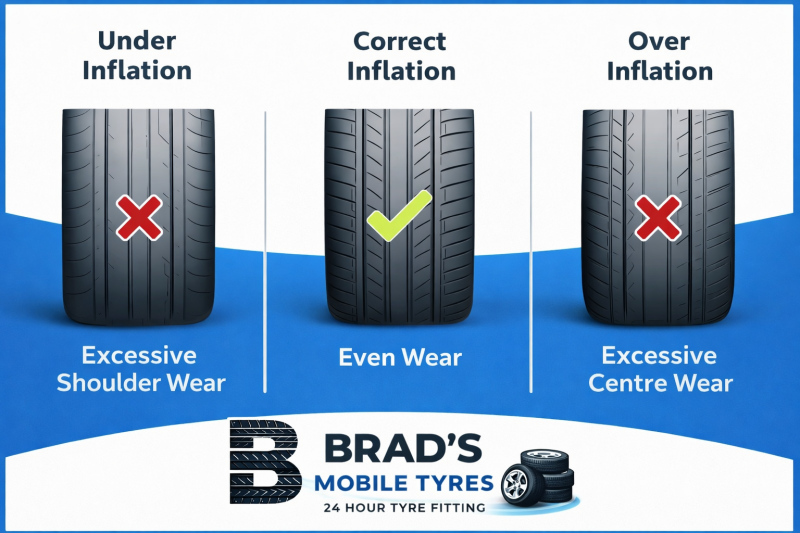
How Seasonal Weather Affects Tyre Performance
Summer Driving Conditions
- Hot roads and long motorway journeys generate additional tyre heat.
- Higher tyre pressures can increase the risk of uneven tread wear.
- Old or damaged tyres are more vulnerable to blowouts during extreme heat.
- Heavy loads and higher speeds increase tyre temperatures further.
- Regular pressure checks become especially important before long journeys.
Before travelling during warmer weather, it is worth checking tyre condition, tread depth, and pressures to reduce the risk of breakdowns on busy routes such as the A13, A127, and M25.
Winter Driving Conditions
- Tyre pressures commonly drop during colder months.
- Low pressure reduces steering response and braking performance.
- Cold weather hardens tyre rubber, reducing grip on wet or icy roads.
- Tyres are more susceptible to pothole damage during winter.
- Slow punctures often become more noticeable during colder weather.
Checking tyre pressures monthly throughout winter can help improve grip, reduce wear, and maintain safe handling.
Spring and Autumn Temperature Swings
- Spring and autumn often bring large temperature differences between mornings and afternoons.
- These fluctuations can cause tyre pressures to vary regularly.
- Wet roads, leaves, and changing weather conditions increase the importance of proper tyre maintenance.
- These seasons are also ideal for checking tread depth and overall tyre condition.
Choosing the Right Tyres for UK Weather Conditions
Different tyre types are designed for different conditions. Choosing the correct tyres for your driving style and local weather can improve both safety and tyre lifespan.
Summer Tyres
- Designed for warmer temperatures and dry or wet roads.
- Provide excellent grip and shorter stopping distances in mild and hot conditions.
- Performance reduces significantly below 7°C.
- Not suitable for snow, frost, or icy conditions.
Winter Tyres
- Built with softer rubber compounds for colder temperatures.
- Provide improved grip below 7°C.
- Better suited to frost, slush, and icy roads.
- Can wear quickly during warmer weather.
All-Season and All-Weather Tyres
- Suitable for drivers wanting year-round convenience.
- Designed to handle a mix of wet, dry, and colder UK conditions.
- Offer a balance between summer and winter tyre performance.
- Ideal for many everyday drivers across Essex and Greater London.
| Tyre Type | Best For | Less Suitable For |
|---|---|---|
| Summer | Warm weather and motorway driving | Snow and freezing temperatures |
| Winter | Cold, icy, and frosty conditions | Hot summer weather |
| All-season | Typical UK driving conditions | Extreme snow or heat |
| All-weather | Changing UK weather conditions | Extreme alpine conditions |
Monthly Tyre Pressure Maintenance Checklist
- Check tyre pressures once per month.
- Always check pressures when tyres are cold.
- Follow the vehicle manufacturer’s recommended PSI settings.
- Do not rely on the pressure listed on the tyre sidewall — this shows the tyre’s maximum pressure rating, not the correct operating pressure.
- Inspect tyres for cuts, bulges, cracks, or uneven wear.
- Check tread depth regularly.
- Do not ignore tyre pressure warning lights or TPMS alerts.
- Check pressures before long journeys or heavy loads.
- Inspect the spare wheel if your vehicle has one fitted.
Drivers who are unsure about tyre condition or pr
Common Tyre Pressure Mistakes
- Checking tyre pressures immediately after driving.
- Ignoring TPMS warning lights.
- Driving for extended periods with a slow puncture.
- Overinflating tyres during winter.
- Leaving winter tyres fitted throughout summer.
- Failing to rotate tyres regularly.
- Ignoring uneven tyre wear.
- Using damaged or cracked tyres.
Keeping Your Tyres Safe Throughout the Year
Regular tyre maintenance plays an important role in vehicle safety, fuel efficiency, and tyre lifespan. Seasonal temperature changes can affect tyre pressure more than many drivers realise, making regular inspections essential throughout the year.
Checking pressures monthly, monitoring tread wear, and replacing damaged tyres early can help reduce the risk of punctures, blowouts, and uneven wear. Properly maintained tyres also improve braking performance and handling in both hot and cold conditions.
Drivers looking for additional tyre safety advice can also find useful guidance from TyreSafe, UK Government vehicle safety guidance
Whether you need emergency roadside assistance, same-day tyre replacement, puncture repairs, locking wheel nut removal, or mobile tyre fitting at home or work, Brads Mobile Tyres provides reliable mobile tyre services across Essex and surrounding areas.
Disclaimer: This article is intended for general guidance only. Always refer to your vehicle manufacturer’s handbook for the correct tyre pressure settings and seek professional advice if you are unsure about tyre safety or condition.
Need Mobile Tyre Fitting in Essex?
Whether you need emergency roadside tyre replacement, a puncture repair, locking wheel nut removal, or same-day mobile tyre fitting at home or work, Brads Mobile Tyres provides fast and reliable tyre services across Essex and surrounding areas.
We cover areas including Grays, Upminster, Basildon, Brentwood, Romford, Thurrock, Lakeside, and nearby locations, with 24-hour emergency tyre assistance available.
You can also learn more about our:
- Mobile Tyre Fitting Essex
- Emergency Tyre Fitting
- Mobile Puncture Repair
- Locking Wheel Nut Removal
- Fleet Tyre Services
Contact Brads Mobile Tyres today for quick, professional mobile tyre fitting wherever you are.
Add comment
Comments